The history
Cotton and the Savannah riverfront
How cotton built Savannah's riverfront: the factors who sold it, the warehouses along River Street, the ballast stones and the ramps cut down the bluff.
Book dinner on the Savannah River ↗Quick answer
Cotton became Georgia's dominant commodity after the American Revolution, and it was shipped through the Port of Savannah. Traders called factors sold it on commission, and Factors Walk, Factors Row and the warehouses of River Street still carry that trade in their names and walls. The ballast stones of the retaining wall were carried in ships as ballast.
King Cotton
Georgia's mild climate offered perfect conditions for growing cotton, which became the dominant commodity after the American Revolution. Its production under the plantation system and its shipment through the Port of Savannah helped the city's European immigrants achieve wealth and prosperity. By the nineteenth century the port had become one of the most active in the United States. Cotton was grown under the plantation system, and the River Street warehouses were also used as holding cells for African slaves, which is part of the story the waterfront tells.
What a factor was
A factor is a type of trader who receives and sells goods on commission, and in most cases in Savannah the goods were King Cotton. Factors Row is the bluffside row of red-brick buildings where cotton brokers bargained during the cotton heyday. Factors Walk takes its name from the same trade. It developed as a freer passageway for factors and business owners, pre-dating River Street by a generation.
The warehouses on River Street
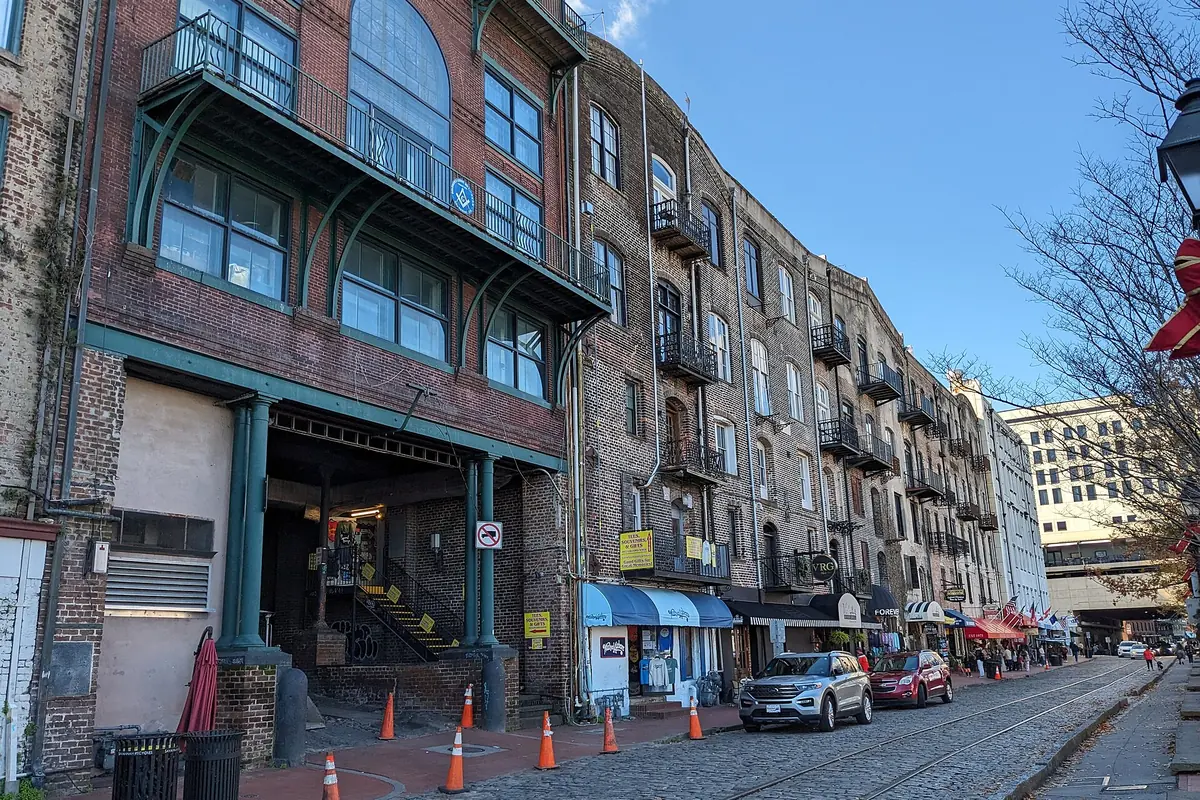
The southern side of River Street is populated by terraces of former King Cotton warehouses. They are the industrial rear portions of the more fashionable Bay Street frontages, so the same building has a smart face on the bluff and a working face at the river. East River Street now consists largely of restaurants, cafés and craft shops, and it is one of the city's major tourist attractions.
River Street today
River Street runs for 2 miles along the river. The lines set into its Belgian block paving were originally used by horsecars and then by streetcars. A large mixed-use development, Plant Riverside District, has opened on the west end of the street. Several riverboats are berthed beside the street, so the river and the cotton row still meet at the dock.
The ballast-stone wall and the ramps
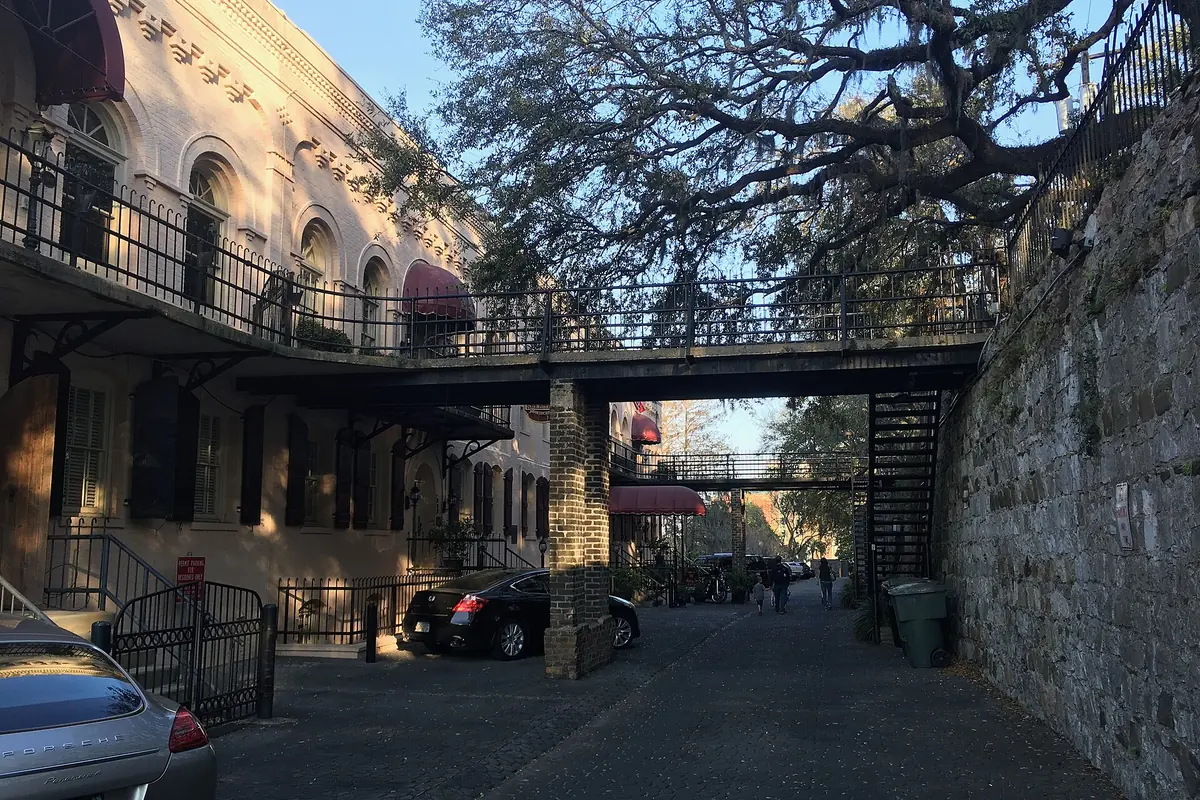
The retaining wall at Factors Walk is built of ballast stone and runs about 0.75 miles, averaging 19 feet in height. Its purpose was to give access to the waterfront while preventing erosion of the bluff. Ramps run down through it to River Street. Ballast was heavy material, such as stones, loaded into ship holds to keep ships stable at sea.
Where the stones came from
A writer on the subject says most of the ballast stones likely came from the British Isles, and that ships dumped the stones in Savannah before loading local goods such as rice, cotton and indigo. Builders reused the stones for streets, walls and houses along the Savannah River. So the stones you pass on the way to a riverboat are an import: ships carried them as ballast and left them in the city.
The squares behind the bluff
Above the river, the plan of the city is older than the cotton trade. Oglethorpe's original plan survives in the Savannah Historic District, and Savannah is noted for its 22 squares and small parks. The downtown area is one of the largest National Historic Landmark Districts in the United States, designated by the federal government. A cruise gives you the working edge of that city, and the squares are the quiet side.
Read next: What you see from the Savannah River
Frequently asked questions
What is Factors Walk named after?
A factor is a trader who receives and sells goods on commission, and in most cases in Savannah the goods were cotton.
Why are there stones in the walls on River Street?
Ships carried stones as ballast to stay stable at sea. The ballast was left in Savannah, and builders reused it for streets and walls.
Are the warehouses still in use?
Yes, as restaurants, cafés and craft shops along East River Street.
Sources